Most businesses still think of video as a marketing asset.
Something used to advertise a product, promote a service, or create content for social media.
But that view is becoming increasingly outdated.
Today, video helps businesses explain complex ideas, showcase expertise, introduce team members, document projects, build trust, strengthen culture, and create meaningful connections long before a sales conversation ever takes place.
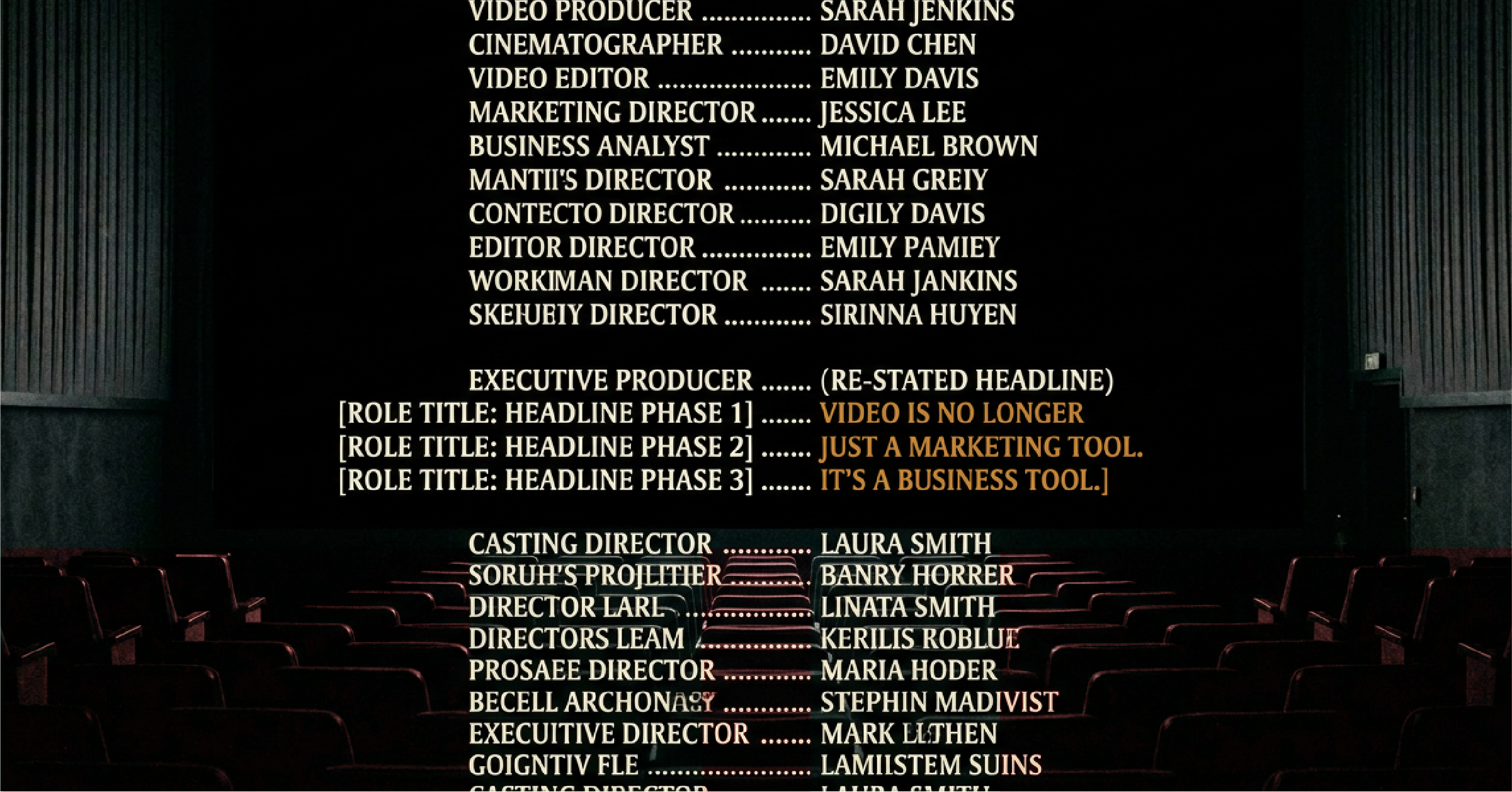
In many cases, video is no longer just a marketing tool. It’s a business tool and one of the most versatile communication tools available.
The reason it works so well comes down to something simple: people connect with people.
Why is video important for business today?
Video helps businesses build trust, communicate more clearly, showcase expertise, strengthen customer relationships, and create meaningful human connection. It is no longer limited to advertising and marketing. Increasingly, businesses are using video across sales, customer experience, recruitment, training, culture, and brand communication.
Why has video become a business tool?
The role of video has expanded significantly over the past few years.
It is no longer reserved for marketing campaigns or advertising budgets.
Today, businesses are using video to introduce new team members, walk clients through complex processes, showcase completed projects, communicate company values, support recruitment efforts, and strengthen customer relationships.
In many cases, video is helping businesses build trust and understanding before a prospective client ever reaches out.
Why does video still matter in an AI-driven world?
The question we get asked most often right now is some version of this:
“If AI can make videos, why would I need a professional?”
It’s a completely fair question. AI has changed the landscape dramatically. The quality of AI-generated visuals, voiceovers, animation and editing continues to improve at a pace that would have seemed impossible just a few years ago. Things that once required significant production budgets can now be created faster and more affordably than ever.
We use AI ourselves, regularly. Like many modern businesses, we’ve embraced AI as a powerful tool, but we also believe there are important conversations to be had around human creativity and the role it continues to play in effective communication.
But here’s the thing: AI is a tool. So is a camera. So is editing software.
The quality of what comes out depends entirely on the thinking that goes in.
AI can generate content. What it can’t do is understand your audience, your positioning, your culture, or the specific nuances that make your business different from the one down the road. It doesn’t know which story needs telling. It doesn’t know what to emphasise, what to leave out, where to let emotion breathe, or how a message needs to shift depending on who’s watching.
That part is still irreplaceably human.
Why do AI-generated videos often feel generic?
The tools are more accessible than they have ever been. Almost anyone can generate an image, a video, a voiceover, or a post. And that accessibility is genuinely exciting, but it comes with a catch.
The more brands lean purely on AI-generated output, the more they start to look, sound and feel like each other.
You have probably already noticed it.
A video appears in your feed and within three seconds you know exactly how it was made. You recognise the voice, the visual style and the slightly-too-smooth motion. A generic script that could belong to any brand in any industry.
Technically impressive but emotionally hollow.
People don’t connect with perfection. They connect with authenticity, with real stories, real expertise, real faces and real moments that don’t feel manufactured or curated. Authenticity rarely happens by accident.
How does original video content build trust?
Your team, clients, environment and projects. The way your people talk about what they do.
These are the things that cannot be replicated or generated.
As audiences become more exposed to AI content, we believe the appetite for the real thing is only going to grow.
Authentic, human-centred storytelling builds something that polished AI output rarely achieves: trust.
The quiet confidence a potential client gets when they can see who they’re dealing with, hear how they think, and feel that there are real humans behind the brand.
Does effective business video require a large budget?
The good news is that effective video no longer requires an enormous budget or a full production crew.
Today there’s a genuine spectrum of options: professionally shot footage, motion graphics, animation, stock-based edits, AI-assisted production, or hybrid approaches that blend several of these together.
The right choice depends on the message, the audience, and what you’re trying to achieve.
Not every story needs a film crew. Not every explainer needs animation. And not everything should be AI-generated.
The skill, and the real value of working with someone who knows what they’re doing, lies in knowing which approach creates the greatest impact for the budget and brief you have.
How do you choose the right type of video for your business?
At The Creative Distillery, video is one of the things we’re most passionate about. Not only because we love the craft of it, but because of what it makes possible.
When it is done well, video doesn’t just communicate a message, it creates a connection.
And in a world where everyone is competing for the same shrinking window of attention, connection is often the difference between being noticed and being forgotten.
Questions worth asking
If you’re exploring the role video could play in your business, these are some of the questions worth considering:
- Why is video important for business today?
- Why does video still matter in an AI-driven world?
- How do businesses create meaningful connection in a world full of content?
- What stories would help your audience better understand, trust, and connect with your brand?
The answers will be different for every business.
But one thing remains true: people connect with people.
And in a world where attention is increasingly difficult to earn, meaningful connection has never been more valuable.
If you’re ready to explore how video could support your brand, culture, customer experience, or marketing strategy, we’d love to help you find the right approach.
Pop us a quick message and let’s see what we can create together.
Follow us on LinkedIn and Facebook for practical insights into branding, storytelling, and modern marketing.